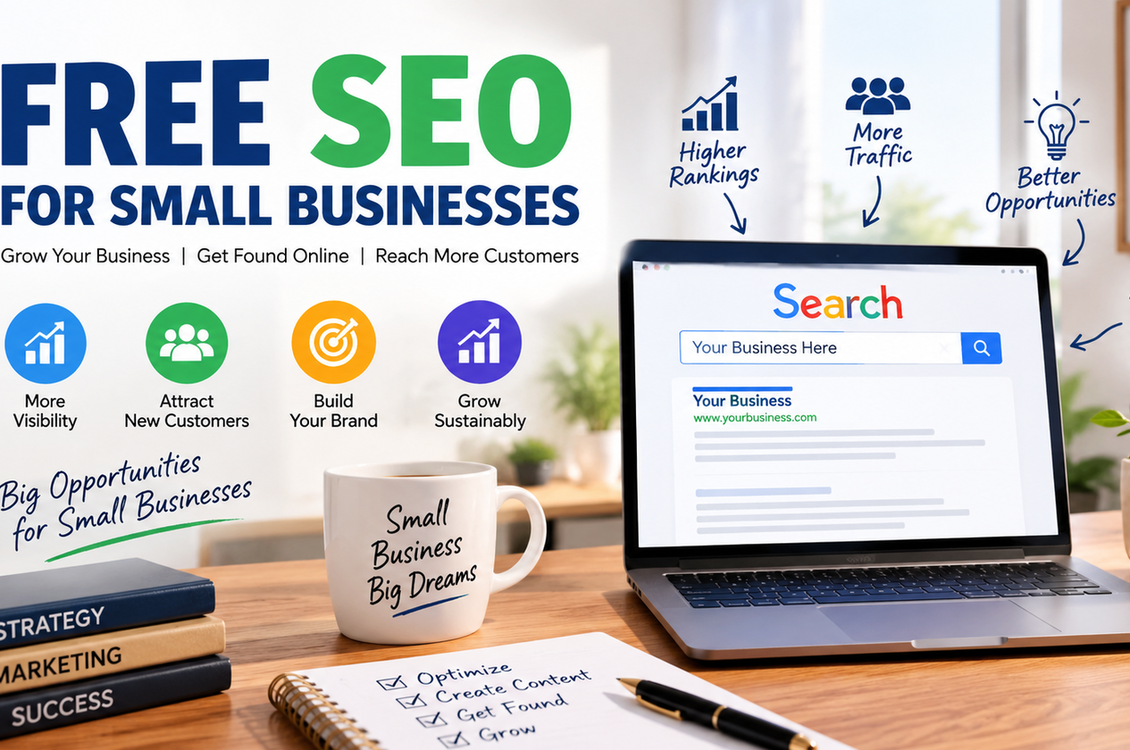
Search engine optimization has a reputation for being expensive, technical, and something only large companies with dedicated marketing teams can afford to do well. For small business owners juggling every part of their operation, that reputation can feel discouraging. But here's the truth: you don't need a big budget or a team of specialists to start showing up in search results. With the right approach, meaningful SEO progress is completely within reach, even for businesses just starting out.
The reason SEO matters so much is simple — it's often the first place potential customers encounter your business. Before they call, visit, or make a purchase, most people search online to see what's available, compare options, and check reviews. If your business isn't showing up in those results, you're invisible to a huge portion of potential customers, no matter how great your product or service actually is. Getting your business found online isn't optional anymore; it's foundational.
This is exactly why more small business owners are turning to accessible tools instead of expensive agencies. Platforms like Yebble have made it possible to get real results without upfront costs. By offering free SEO for small businesses, they give owners a way to improve their search visibility, optimize their online presence, and start attracting organic traffic without needing a marketing budget at all. This kind of accessibility levels the playing field, allowing smaller businesses to compete with larger, better-funded competitors in local and niche search results.
So what does effective SEO actually look like for a small business? It starts with the basics: making sure your business information is accurate and consistent everywhere it appears online. Your name, address, phone number, website, and hours should match across every directory, listing, and profile. Search engines pay close attention to this consistency, and even small discrepancies can hurt your rankings. Getting these fundamentals right costs nothing but a bit of time, yet it lays the groundwork for everything else.
From there, content plays a major role. Search engines reward businesses that provide genuinely useful information to visitors. This doesn't mean you need a blog with hundreds of posts — even a well-written homepage that clearly explains what you offer, who you serve, and why customers should choose you can make a meaningful difference. Adding location-specific details, answering common customer questions, and using natural language that reflects how people actually search all help improve your relevance in search results.
Customer reviews are another often-overlooked piece of the SEO puzzle. Search engines treat reviews as a signal of trustworthiness and relevance, especially for local searches. Encouraging satisfied customers to leave honest feedback, and responding to those reviews thoughtfully, can meaningfully boost your visibility over time. Best of all, this strategy costs nothing beyond the effort of asking and engaging — no advertising spend required.
Backlinks, while sometimes considered an advanced SEO concept, are also more accessible than many business owners realize. Getting listed in local directories, partnering with complementary businesses for cross-promotion, or being featured in community news stories all create valuable links back to your website. These connections signal credibility to search engines and can meaningfully improve your rankings, all without the cost of a paid link-building campaign.
It's worth noting that SEO isn't an overnight fix — it's a gradual process that builds momentum over time. Businesses that consistently maintain accurate listings, produce helpful content, and engage with their customers tend to see steady improvement in their search visibility. This is actually good news for small business owners, because it means your competitive advantage isn't determined by how much you can spend, but by how consistently and thoughtfully you show up. That kind of sustainable growth tends to outlast businesses that rely purely on paid campaigns.
Another advantage of focusing on organic search strategies is that the traffic you attract tends to be higher intent. Someone who finds your business through a relevant search is usually further along in their decision-making process than someone who simply saw an ad. They're actively looking for a solution, which means they're more likely to convert into an actual customer. This makes the time invested in SEO particularly valuable, since it tends to bring in the kind of visitors who are ready to engage.
For business owners who've felt priced out of proper SEO in the past, this shift toward accessible, no-cost tools is worth paying attention to. Yebble was created specifically to help small businesses navigate this process, offering an easy way to strengthen your online presence and improve your search visibility without the financial barriers that once made SEO feel out of reach. Whether you're just starting to build your online presence or looking to sharpen an existing strategy, taking advantage of these tools can help your business get found by the customers who are already searching for exactly what you offer.
Follow this link for another blog - Free Local Advertising