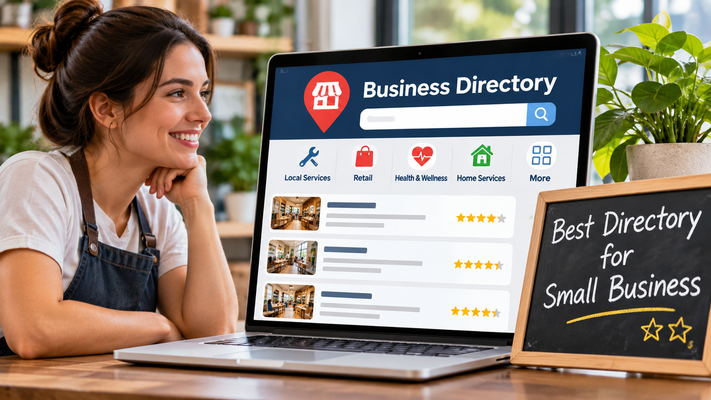
Every small business owner has felt it: you work hard on your product or service, yet customers still struggle to find you. Meanwhile, bigger competitors seem to appear everywhere online. The good news is that visibility does not always require a massive advertising budget. Choosing the best directory for small business can put your name in front of ready-to-buy customers, build trust with search engines, and give your website a steady stream of quality traffic.
Online directories have evolved far beyond the old phone book. Today they act as search platforms, review hubs, and trust signals all in one. Shoppers use them to compare providers, read feedback, check hours, and make quick decisions. Search engines also notice them, treating consistent listings across reputable platforms as proof that a business is real and established.
But what makes the best directory for small business different from the thousands of other listing sites out there? In short, it is a platform that attracts genuine visitors, presents your information clearly, and gives you tools to stand out without hidden costs or confusing rules. It should be easy to use, well maintained, and relevant to your industry or region. A directory that checks those boxes becomes a long-term marketing asset instead of just another profile you forget about.
Why Directories Still Matter for Small Businesses
Small businesses usually work with limited time and money, so every marketing effort has to count. Directories offer a rare mix of low cost and high return. A single well-optimized listing can send referral traffic, generate phone calls, and create a backlink that supports your search rankings.
They also help with local visibility. When someone searches for a service “near me,” search engines look for signals that confirm a business operates in that area. Accurate listings across trusted platforms provide exactly those signals. For a neighborhood bakery or a local repair shop, that can be the difference between appearing on page one and being buried.
What to Look for in a Directory
Not every platform deserves your attention. Before you create a profile, evaluate a few key points.
Real traffic: Does the site attract actual visitors who match your target audience?
Moderation: Are listings reviewed, or is the site filled with spam and irrelevant businesses?
Cost transparency: Is listing free, or are there clear paid upgrades with real benefits?
Profile features: Can you add photos, services, hours, links, and a detailed description?
Review tools: Can customers leave feedback, and can you respond to it?
Ease of use: Is the design clean and the sign-up process simple?
If a site fails several of these tests, move on. Time is too valuable to spend on platforms that offer little in return.
How Directory Listings Support Off-Page SEO
Off-page SEO covers everything that happens outside your website to improve your rankings, including backlinks, citations, reviews, and brand mentions. Directories contribute to all of these at once.
A citation is any mention of your business name, address, and phone number on another website. When search engines see matching details repeated across reputable sources, their confidence in your business grows. The link pointing to your site adds further authority, especially when the directory is respected and relevant to your field. This is why choosing the best directory for small business matters more than signing up everywhere. A few strong listings outperform dozens of weak ones.
Quality Over Quantity
It can be tempting to submit your business to hundreds of sites in a single afternoon. Resist that urge. Low-quality directories often carry spammy links that can harm your reputation with search engines rather than help it.
Instead, build a focused list. Start with a general platform that has a strong audience, then add a handful of niche or local directories related to your industry. A landscaper, for example, might choose a home services directory and a regional business listing. This targeted approach looks natural, delivers better leads, and is easier to maintain.
Setting Up a Profile That Converts
Once you have chosen your platforms, treat each profile like a mini storefront. Start with accurate basics: business name, address, phone number, website, and opening hours. Keep these identical everywhere, down to abbreviations and punctuation.
Next, write a clear, friendly description. Explain what you offer, who you help, and what sets you apart. Avoid stuffing it with keywords, since readers will notice, and so will search engines. Choose precise categories, upload high-quality photos, and add links to your website or booking page. Profiles with complete information consistently earn more clicks and calls than half-finished ones.
Encourage and Manage Reviews
Reviews are one of the strongest persuasion tools a small business has. Ask happy customers to share their experience, and make it easy by sending a direct link after a sale or appointment. Even a short comment helps.
Respond to every review, whether it is glowing or critical. A calm, helpful reply to a complaint shows future customers that you care about service. Over time, a steady flow of authentic reviews raises your credibility and can improve your local rankings. The best directory for small business will give you simple tools to collect and answer feedback.
Keep Your Listings Fresh
A listing is not a one-time task. Businesses move, change phone numbers, adjust hours, and add services. Outdated information frustrates customers and weakens trust signals for search engines.
Set a reminder to review your profiles every few months. Update photos, refresh descriptions, and check that links still work. Active profiles stand out, and regular updates tell search engines that your business is alive and well.
Measure What Works
To know whether your listings are paying off, track the results. Use your analytics tool to see how many visitors arrive from each directory, and note any changes in calls, form submissions, or local search rankings. After a few months, patterns will emerge.
Keep investing in platforms that bring real customers, and let the underperformers go. This simple habit keeps your strategy lean and your marketing time well spent.
Common Mistakes to Avoid
Several errors can quietly undermine your efforts. Inconsistent business details top the list, since mismatched addresses or phone numbers confuse search engines. Leaving profiles incomplete is another, as a bare listing looks careless. Ignoring reviews, paying for automated mass submissions, and forgetting to update outdated information round out the usual problems. Avoid these, and your listings will work harder with less effort.
Final Thoughts
Growing a small business is rarely about one dramatic move. It is about showing up in the right places, being easy to trust, and making it simple for customers to choose you. A strong directory presence supports all three. Choose carefully, keep your information accurate, collect honest reviews, and review your results regularly. If you are ready to put your business in front of more local customers, a platform like Yebble offers a simple way to create a professional listing and start getting discovered.
Follow this link for another blog - Advertise Your Business Online