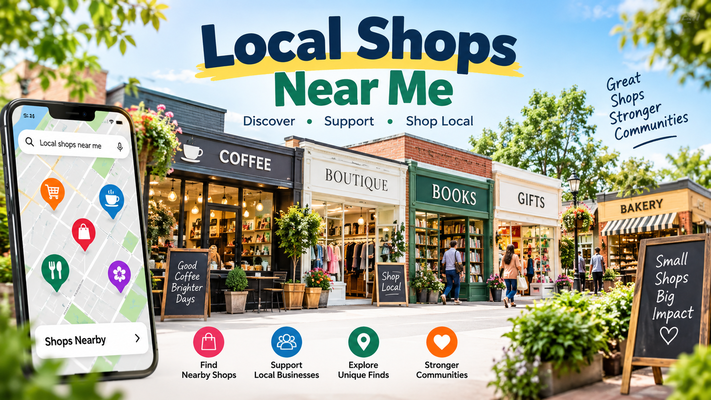
There's a quiet shift happening in the way people shop. After years of one-click checkouts and next-day deliveries, more and more people are typing a very different kind of search into their phones: something closer to home, something with a little more personality. It's no coincidence that so many of these searches boil down to the same simple phrase — people just want to find good, trustworthy places to spend their money nearby.
This isn't nostalgia. It's a genuine change in priorities. Shoppers are tired of faceless warehouses and impersonal customer service. They want to know the person who sold them their coffee beans or the family who's run the corner hardware store for twenty years. They want their money to actually mean something in the place they live, rather than disappearing into a distant corporate account. That desire for connection is exactly why local commerce is having a moment again.
If you've ever found yourself searching for local shops near me, you already understand the appeal. It's not just about convenience, though that certainly helps. It's about discovering the kind of hidden gems that never show up in generic search results — the bakery that only locals know about, the boutique with handmade jewelry, the bookstore owner who actually remembers your name. These are the businesses that give a neighborhood its character, and they're often just a few minutes away, waiting to be found.
The trouble is, finding them isn't always easy. Search engines are cluttered with paid ads, big-box retailers, and outdated listings. A directory that hasn't been updated in three years can send you to a shop that closed down long ago. That's the real problem with a lot of "local" search results — they're technically nearby, but they're not necessarily current, curated, or trustworthy. What shoppers actually need is a reliable way to cut through the noise and see what's genuinely thriving in their area right now.
The Real Value of Shopping Local
There's a ripple effect every time you choose a small, independent business over a national chain. Studies on local economies consistently show that money spent at community-based shops tends to stay within that community far longer than money spent at large corporations. It goes toward paying local employees, renting local storefronts, and supporting other nearby businesses through supply chains and partnerships. In other words, one purchase can quietly support an entire local ecosystem.
There's also something to be said for quality and individuality. Local shop owners are often deeply invested in their craft. A independent plant shop owner might know the exact care instructions for every single item on their shelves. A family-run deli might source ingredients from farms just outside of town. These aren't details you get from scrolling through an algorithm-driven marketplace. They come from real relationships, built one visit at a time.
And then there's the community aspect, which is harder to quantify but easy to feel. Local shops host neighborhood events, sponsor school fundraisers, and become informal gathering spots. They're part of the social fabric of a place, not just a transaction point. When people talk about wanting to support their community, this is usually what they mean — not an abstract idea, but the very real, very human experience of walking into a shop where someone actually cares whether you had a good day.
Why Discovery Is Harder Than It Should Be
Given all these benefits, it's a little surprising how difficult it still is to actually discover great local businesses. Part of the problem is visibility. Small shops rarely have the marketing budgets of national chains, so they don't always show up prominently in search results or social media feeds. A wonderful little shop might be operating just a few blocks from someone who would love it, and yet that person may never stumble across it simply because the shop hasn't invested in expensive advertising.
Another issue is fragmentation. Local business information is often scattered across outdated directories, inconsistent map listings, and social media pages that haven't been updated in months. Shoppers end up piecing together information from five different sources just to figure out if a store is open, what it sells, and whether it's worth the trip. That kind of friction discourages people from even trying, and they default back to the familiar convenience of large online retailers.
This is exactly the gap that modern local-discovery platforms are trying to close. Instead of relying on scattered, outdated listings, these tools aim to curate accurate, up-to-date information about small businesses in a given area — hours, offerings, reviews, and the kind of authentic detail that helps a shopper decide whether a place is right for them. The goal isn't just to list businesses; it's to make discovering them feel effortless again.
How to Make Local Shopping a Habit
Shifting even a portion of your regular purchases toward independent businesses doesn't require a complete lifestyle overhaul. It starts small. The next time you need a gift, instead of defaulting to a big online marketplace, take a few minutes to see what's available nearby. You might be surprised by the quality and creativity you find just around the corner.
It also helps to think seasonally. Farmers markets, pop-up shops, and seasonal boutiques often appear during specific times of year, offering products you simply can't find anywhere else. Keeping an eye out for these events is a great way to build a habit of supporting local makers and sellers, rather than treating it as a one-time decision.
Word of mouth still matters too. Ask friends, neighbors, or coworkers about their favorite independent shops. Personal recommendations often lead to discoveries that no algorithm would surface, because they're based on genuine experience rather than advertising spend. Combining these personal tips with a reliable discovery tool tends to produce the best results — you get both the human touch and the convenience of organized, accurate information.
Bringing It All Together
At the end of the day, the appeal of shopping locally isn't complicated. People want authenticity, connection, and the satisfaction of knowing their money is making a real difference somewhere close to home. The challenge has simply been discovery — finding the right places without wading through outdated listings or generic search results.
That's where a platform built specifically around this need makes all the difference. Yebble was created to solve exactly this problem, helping shoppers uncover trustworthy, up-to-date, and genuinely interesting small businesses in their own neighborhoods. Instead of guessing which listings are still accurate, users get a curated, reliable way to explore what's actually available nearby. Whether you're hunting for a unique gift, a new favorite coffee spot, or simply want to spend your money closer to home, tools like this make it easier than ever to rediscover the businesses that make a community feel like a community.
Follow this link for another blog - Best Local Services